

The publishing calendar says Monday, but the campaign still exists as scattered notes: one audience idea, several unchecked figures, and no agreement about what belongs in a post, an image, or a fifteen-second clip. That is the situation facing a property agent whose posts attract viewers outside the service area. The immediate job is to align discovery, profile language, and calls to action with a useful local audience, using service area, buyer stage, confirmed listing facts, prohibited claims, content pillars, lead action, and compliance reviewer. Speed at this stage depends on a tighter decision, not more output. The chosen angle is visual explanation: turn an abstract growth question into a comparison people can inspect. The aim is one controlled production chain, with human judgment at every handoff.
Start with the job behind the search. Someone using how to increase Instagram followers organically may want faster growth, steadier interaction, safer account operation, or help after a restriction; the phrase alone does not prove which remedy is appropriate. For this campaign, the useful objective is to align discovery, profile language, and calls to action with a useful local audience. It keeps the article focused on an action. Record the exact search language once, then use natural terms such as audience growth, engagement plan, account review, or recovery process. Do not promise outcomes or imply official platform approval. The word organically should refer to actual work: research, publishing, collaborations, discovery, replies, and profile conversion. It should not become a decorative label for undisclosed delivery. Audience fit begins before the post is made. Build the campaign around a repeatable question-to-asset workflow and measure qualified actions.
A workable brief answers the questions that otherwise return during revision. State who needs help, what single decision should change, what content must be produced, and what evidence exists. Put service area, buyer stage, confirmed listing facts, prohibited claims, content pillars, lead action, and compliance reviewer in a source table for a property agent whose posts attract viewers outside the service area, with confirmed, pending, and illustrative statuses. Write the account-access boundary. Specify voice as calm, direct, and willing to state uncertainty. Record formats, ratios, clip length, publishing window, owners, and separate factual, editorial, visual, security, and final sign-offs.
Set separate factual, editorial, visual, security, and final approval gates. Name the owner and the version reviewed at each gate. A vague final check leaves predictable gaps. Approval covers the actual export, including its crop, captions, sound, and visible overlays, not only the source copy or prompt used to create it.
Generate copy in stages. First request three message routes: a common mistake, a worked decision, and a review checklist. Require every route to use only the brief and mark missing evidence rather than invent platform rules, service capabilities, or results. Choose the route that serves the objective, then create a long explanation, caption, short hook, carousel text, voiceover, and title options. Delete any sentence that adds enthusiasm but no method. A hypothetical neighborhood guide that uses sourced facts and asks viewers to save a viewing checklist can anchor each derivative without becoming a testimonial.
An image prompt should describe what the viewer learns first and what comparison follows. For qualified local account growth, a hypothetical neighborhood guide that uses sourced facts and asks viewers to save a viewing checklist gives the design a concrete job. State camera distance or diagram view, layout, focal object, restrained palette, background complexity, light, ratio, mobile crop, and empty text zone. Overlay verified words during design. Inspect hands, objects, interface geometry, stray characters, logos, borders, shadows, repeated elements, contrast, and screen-size reading order.
https://www.518fans.com/detail/ins-auto-vip.html
Storyboard one question in five beats: real difficulty, information to collect, one illustrative example, a human check, and the next decision. Use a hypothetical neighborhood guide that uses sourced facts and asks viewers to save a viewing checklist throughout. Put voiceover, on-screen text, shot direction, duration, source or assumption, and review note in separate columns. Give the comparison enough screen time. Generate visual fragments and assemble them manually. Check spelling, continuity, changing objects, warped interfaces, subtitle accuracy and safe areas, pace, pronunciation, volume, first and last frames, and comprehension with sound muted.
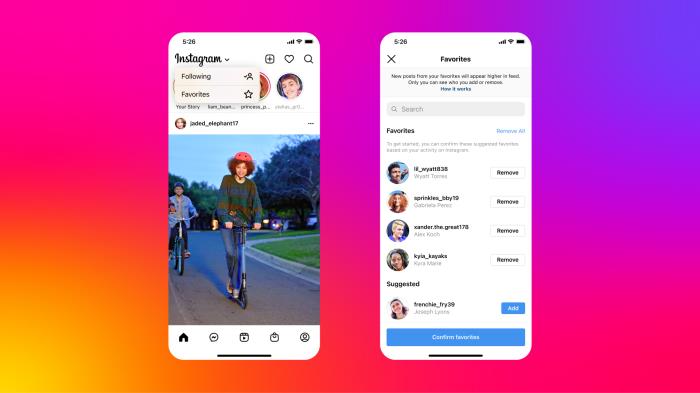
Platform adaptation is a new edit, not copy, paste, and resize. Keep the approved claim, scenario, evidence status, and voice while changing the opening, length, sequence, crop, rhythm, and response prompt. A carousel needs one job per panel. Check 1:1, 4:5, 9:16, or 16:9 only where required, confirm mobile crop and interface-safe margins, and read every derivative against the brief rather than another platform's shortened copy.
Use a human checklist that separates correctness from polish. The factual pass verifies sources, dates, policy language, service claims, examples, quantities, and account-access assumptions. The editorial pass checks audience fit, restrained voice, repeated wording, ambiguity, cultural meaning, accidental imitation, and unsupported outcomes. Review at phone width. The visual pass covers typography, characters, icons, hands, screens, edges, crop, safe areas, contrast, and reading order; the video pass covers continuity, subtitle accuracy, rhythm, pronunciation, volume, sound-off comprehension, and silent playback.
The weak points of AI are specific enough to plan around. Text can fabricate policies, rely on stale advice, overstate safety, confuse correlation with cause, imitate recognizable brands, or turn a hypothetical test into a result. It may also produce repetitive structure and inconsistent terminology across formats. Images can create broken lettering, impossible hands, misleading interfaces, and duplicate objects; clips can lose continuity or caption accuracy. Confidence does not establish provenance. Human reviewers should verify sources, reconcile assets, replace raster text, and approve final exports.
One brief can support many assets only while it remains the source of truth. For a property agent whose posts attract viewers outside the service area, the sequence is audience decision, evidence check, message route, copy, image plan, storyboard, platform edit, and human approval. Useful speed comes from fewer unresolved decisions. Keep service area, buyer stage, confirmed listing facts, prohibited claims, content pillars, lead action, and compliance reviewer traceable, use a hypothetical neighborhood guide that uses sourced facts and asks viewers to save a viewing checklist as an illustration rather than proof, and update the brief whenever a correction affects several formats. The final action is documented review of the actual files scheduled for publication.